
Muzhda Qasim Qader
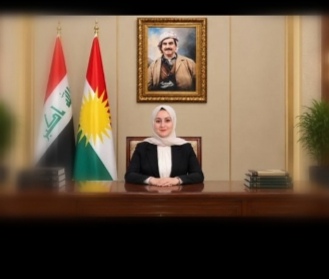
Assistant Lecturer
College of Health Sciences
Department of Public Health
This email address is being protected from spambots. You need JavaScript enabled to view it.
About
Muzhda Qasim Qader is an Assistant Lecturer in the Department of Public Health, College of Health Sciences, Hawler Medical University, Erbil, Kurdistan Region, Iraq. She holds a Master’s degree in Environmental Biotechnology and has authored or co-authored nearly 50 scientific publications. Her research focuses on environmental contamination, water and wastewater treatment, human health risk assessment, and the impacts of climate change on environmental systems.
Teaching
She teaches undergraduate courses in Microbiology, Public Health, and Statistics. Her teaching connects biological sciences with population health and the application of statistical methods to health research. She aims to develop students’ scientific understanding, critical thinking, and ability to interpret evidence relevant to public health. Her background in Environmental Biotechnology supports the integration of environmental and community health perspectives into her teaching.
Professional Activities and Committee Service
She has contributed to quality assurance and accreditation activities and has served on undergraduate programme and research committees at the College of Health Sciences. Through these responsibilities, she supports academic standards and continuous improvement in teaching, learning, and research.
She also serves as the college website administrator, maintaining and updating website content to share college news, academic activities, and announcements with students, staff, and the wider community.
Research Gate : https://www.researchgate.net/profile/Muzhda-Qader
Google Scholar: https://scholar.google.com/citations?user=hESnCh4AAAAJ&hl=en
https://communities.springernature.com/users/muzhda-qasim
https://orcid.org/0000-0002-3561-7137
https://www.webofscience.com/wos/author/record/NTQ-2594-2025
https://httphawlermedicaluniversity.academia.edu/MuzhdaQasim
https://www.scopus.com/authid/detail.uri?authorId=58247403100
https://loop.frontiersin.org/people/3067750/bio
https://communities.springernature.com/users/sign_in
https://httphawlermedicaluniversity.academia.edu/MuzhdaQasim
https://www.linkedin.com/feed/
Research Gate : https://www.researchgate.net/profile/Muzhda-Qader
Google Scholar: https://scholar.google.com/citations?user=hESnCh4AAAAJ&hl=en
https://communities.springernature.com/users/muzhda-qasim
https://orcid.org/0000-0002-3561-7137
https://www.webofscience.com/wos/author/record/NTQ-2594-2025
https://httphawlermedicaluniversity.academia.edu/MuzhdaQasim
https://www.scopus.com/authid/detail.uri?authorId=58247403100
1. Using microalga Coelastrella sp. to remove some nutrients from wastewater invitro
2. Role of Microalgae in Environmental Biotechnology to Remove Heavy Metals
3.Potential of Fungal-Microalgal Species in the Environmental Biotechnology
4.Application of Micro-Alga Tetradesmus Nygaardi for Wastewater Quality Improvement
6.Using Microalga Scenedesmus quadricauda for the Improvement of Municipal Wastewater Quality
8.Bioremediation of Heavy Metals by using Aspergillus niger and Candida albicans
9. Climate Change Anxiety Symptoms in the Kurdistan Region of Iraq
10. Comparative Analysis and Risk Assessment of Heavy Metal Detoxification by Using Bacterial Strains
12. Household Cleaning Effect on Women's Health: A Potentially Important Public Health Concern
15. Harnessing optimal light conditions for sustainable microalgal cultivation and biomass enhancement
16. Comparative Evaluation of Microbial Strains for the Remediation of Heavy Metals from Synthetic Media
18. Comparative Evaluation of Microbial Strains for the Remediation of Heavy Metals from Synthetic Media
21. Climate change anxiety and its effect on emotional and functional health: Regional analysis
27. Long-Term Air Pollution and Health Risks in Erbil, Kurdistan-Iraq: A Satellite-Based Assessment
29. Measuring the Pulse of SBR Technology: Efficiency, Contamination Indices, and Long-Term Trends
31. Risk‐Informed Assessment of Heavy Metal Exposure Through Wheat Flour Consumption in Northern Iraq
35. Heavy metals and preservatives in commercial yoghurt from northern Iraq
39. Toxic metal exposure from canned foods: a comprehensive risk assessment study in the middle east
 Peshawa Qazi Street,