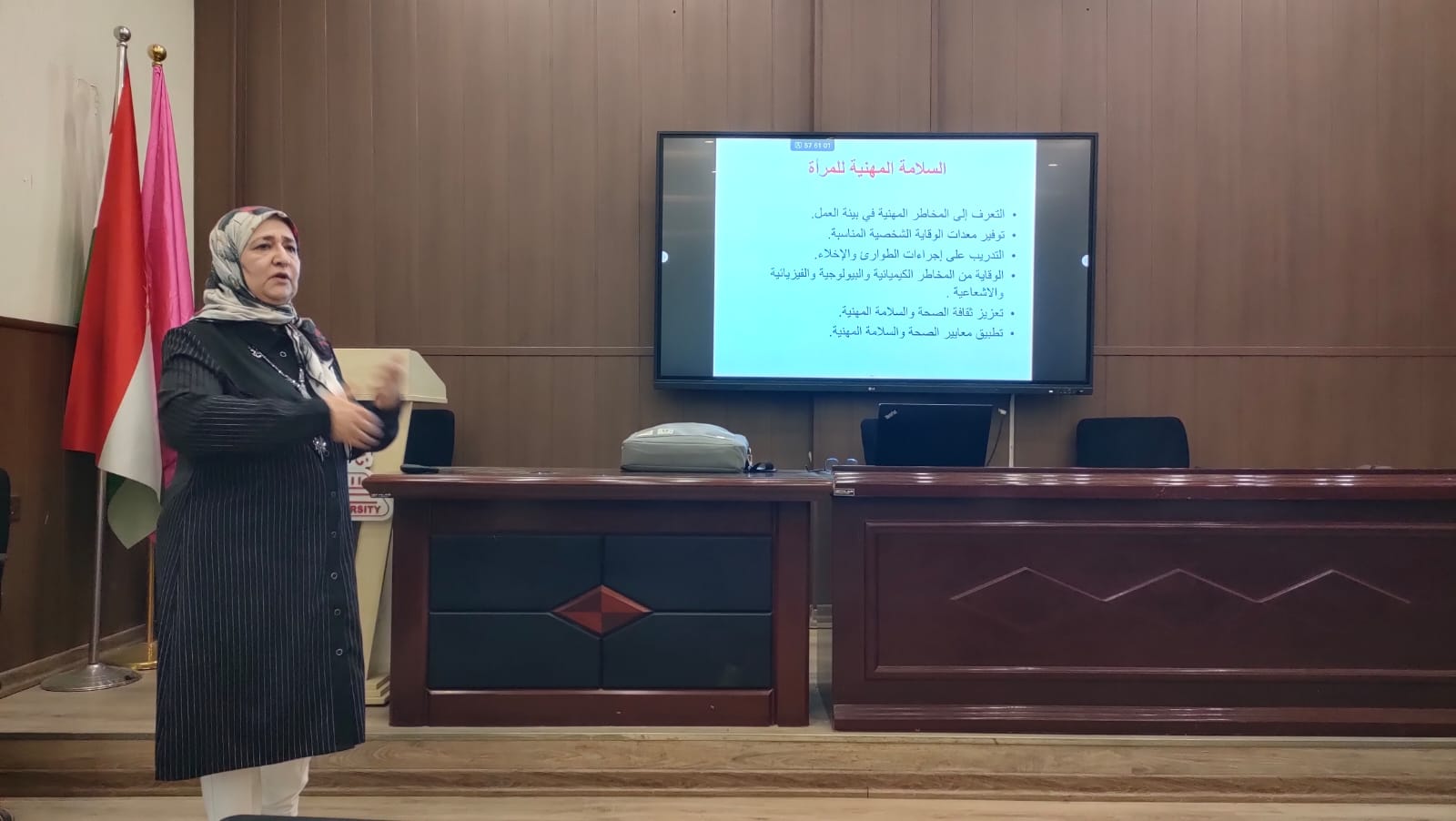
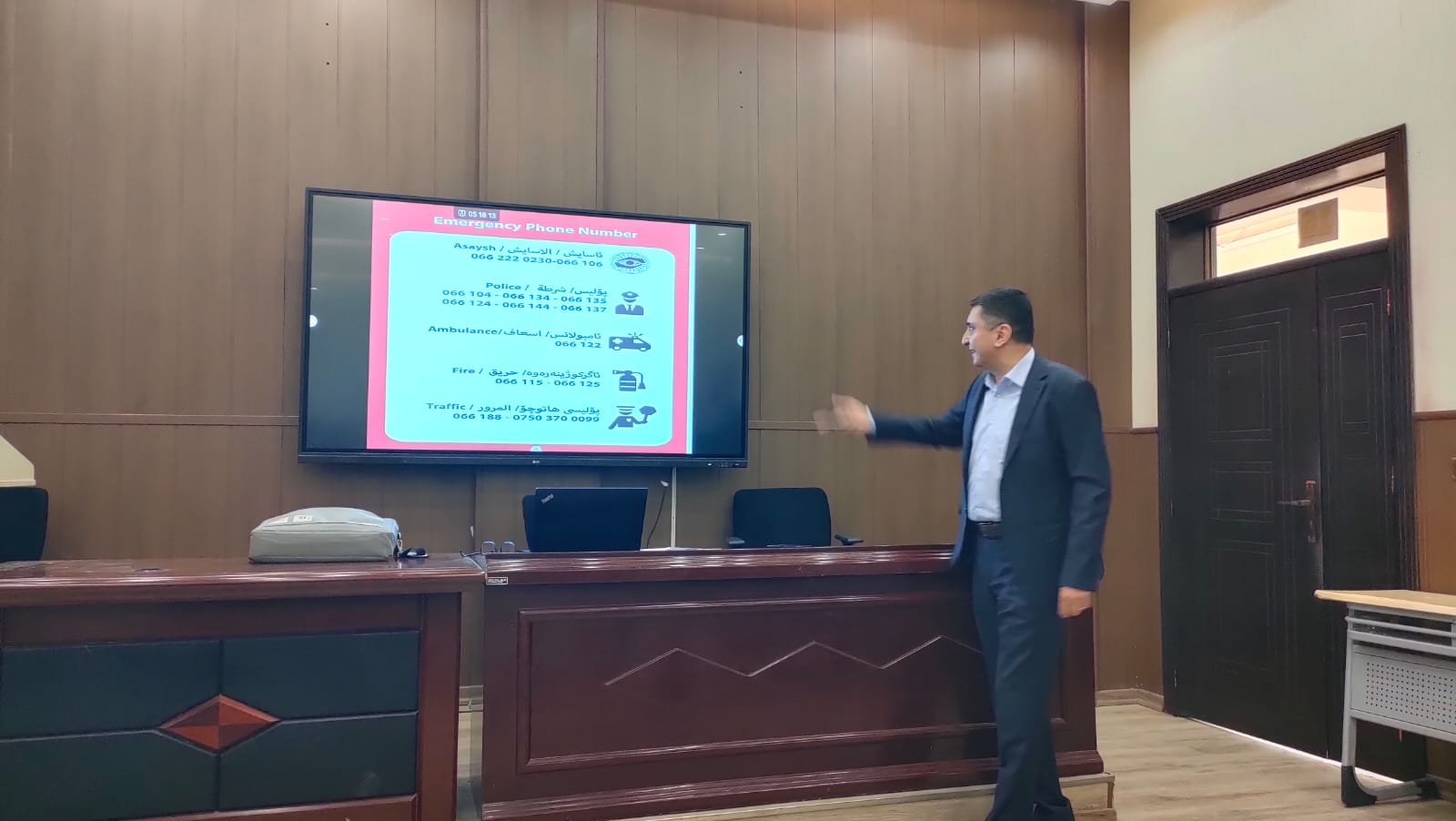
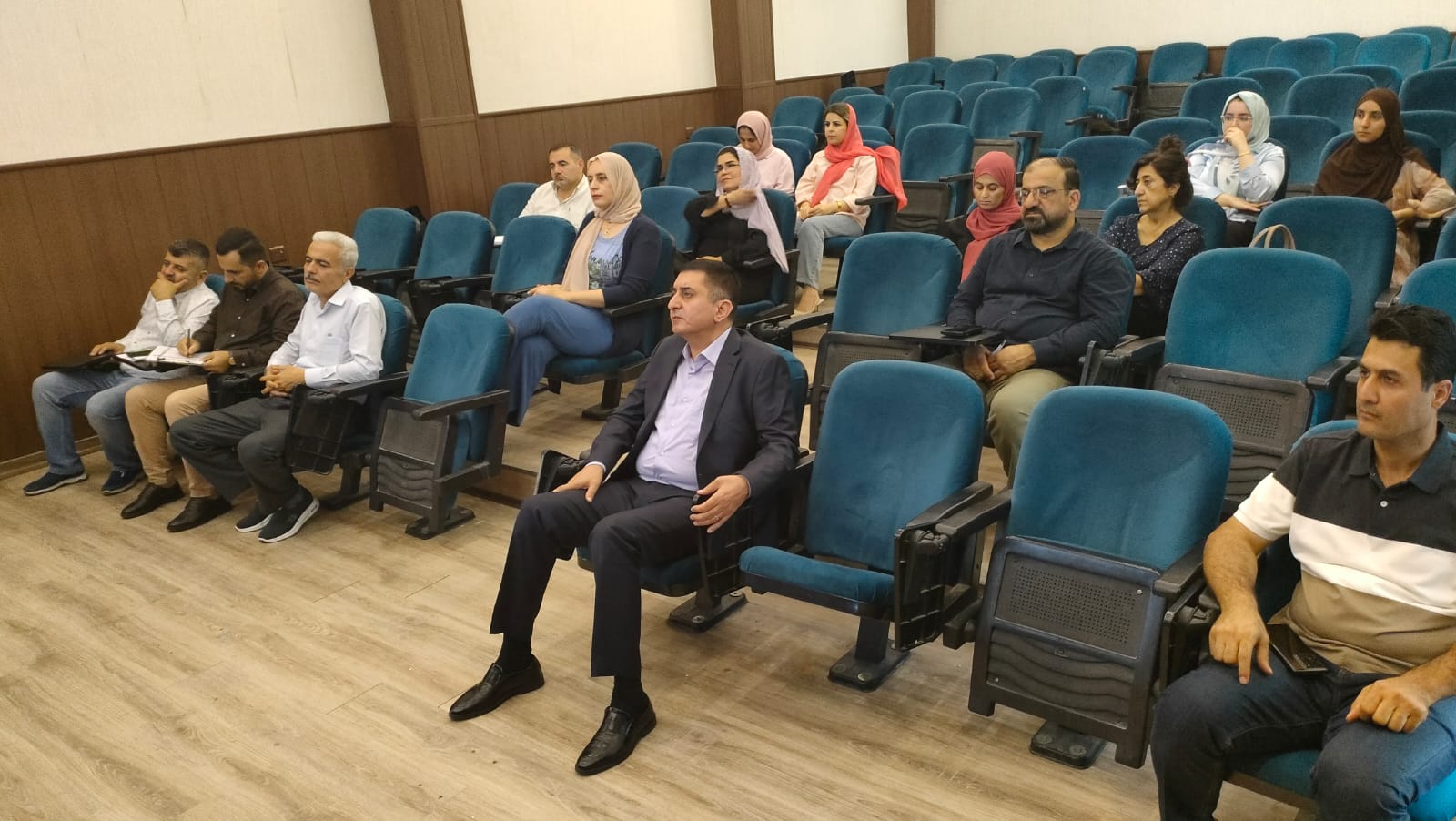

The Directorate of Health and Safety at Hawler Medical University organized a dedicated workshop titled Empowering Women Through Safety Awareness and Prevention.
Hosted at the Seminar Hall within the College of Pharmacy, the session targeted university staff, lecturers, and students. The initiative delivered comprehensive education covering personal safety strategies, digital security practices, legal rights awareness, violence prevention, and emergency preparedness. Participants engaged in structured discussions aimed at recognizing, preventing, and mitigating safety risks across academic and community environments. The event concluded with an interactive dialogue focused on developing actionable safety measures within the institution.
Why It Is Important for women to have awareness regarding safety?
Women's safety and empowerment are fundamental pillars for sustainable social development, public health, and institutional excellence. Providing targeted safety education reduces personal vulnerability while building individual self-assurance and informed decision-making skills. Collaborative efforts connecting educational bodies, healthcare institutions, and community stakeholders cultivate a proactive culture of mutual support and protection. Establishing safe, equitable, and secure environments directly enhances women's active participation in academic, professional, and leadership roles across the university and broader society.
The organizers express sincere appreciation to the Hawler Medical University Presidency, the Office of the Vice President for Student Affairs, and the Directorate of Health and Safety for their institutional support. Special recognition is extended to all attending faculty members, administrative staff, and students whose active participation and valuable contributions during the discussion session enriched the initiative.
Key Notes for Readers
- Institutional Commitment: Establishing zero-tolerance policies toward safety risks creates an inclusive environment for women in higher education.
- Proactive Prevention: Knowledge of digital security, legal protections, and emergency protocols forms the foundation of individual threat mitigation.
- Community Responsibility: Maintaining a safe environment relies on continuous collaboration between academic departments, administration, and public health stakeholders.
Assist. Prof. Dr. Sahar Mohamed Zaki and Lecturer Haval A. Hamadamin
Department of Medical Microbiology, College of Health Sciences, Hawler Medical University, Erbil, Kurdistan Region, Iraq,